
Standing seam or exposed fastener: metal roof cost, pitch, and upkeep
What each one costs per square foot, which roof pitch it needs, and how much upkeep to expect.
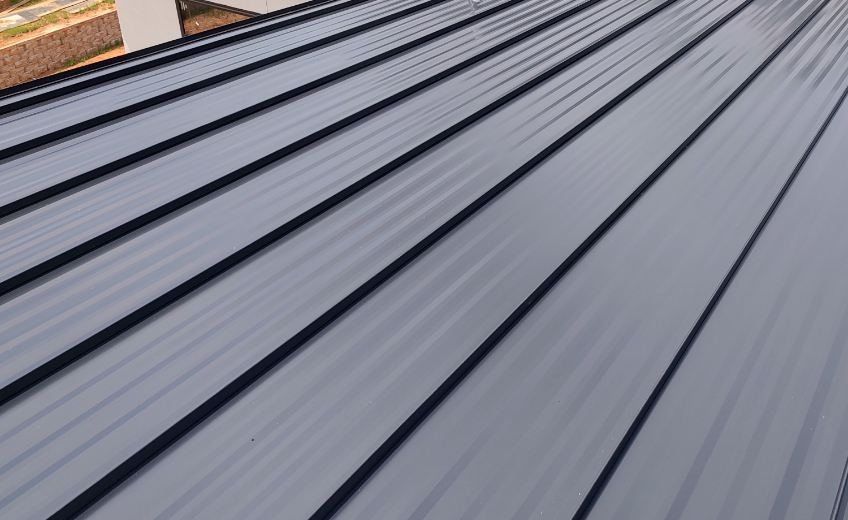
The short answerIn East Texas, an exposed fastener metal roof runs about $8 per square foot installed, and standing seam about $9 to $10. Standing seam hides its fasteners, uses thicker steel, and needs far less upkeep. Exposed fastener costs less up front, but the screws have to be replaced every 8 to 10 years. If your roof is flatter than a 4:12 pitch, it should be standing seam.
What a metal roof costs
These are typical installed prices for the roofs we put on in East Texas. Shingles are included so you can see the gap.
| Roof type | Typical installed price | On a 2,500 sq ft roof |
|---|---|---|
| Asphalt shingles | $4 to $5 per sq ft | $10,000 to $12,500 |
| Exposed fastener metal | About $8 per sq ft | About $20,000 |
| Standing seam metal | $9 to $10 per sq ft | $22,500 to $25,000 |
Square footage here means the roof surface, which is larger than the floor area of the house. Pitch and overhangs add to it.
The step from exposed fastener to standing seam is smaller than most people expect: roughly $1 to $2 a square foot for thicker steel, hidden fasteners, and much less maintenance.
What moves the price
- How cut up the roof is. Valleys, hips, dormers, and penetrations all mean more cutting, more trim, and more labor. A simple gable roof costs less per square foot than a complex one of the same size.
- Pitch. Steep roofs take longer and need more safety setup.
- Tear-off and decking. The old shingles should come off before metal goes on. Any bad decking found under them is replaced.
- Gauge and finish. Thicker steel and better paint cost more and last longer.
The only way to get a real number is to measure the roof. Ask us for a written price, and we will quote both systems so you can compare. Financing is available.
How each system is attached
On a standing seam roof, each panel locks into the next along a raised seam, and the clips and screws that hold it down sit under that seam. Nothing is driven through the face of the panel, so no fastener is left out in the sun and rain.
On an exposed fastener roof, the panels overlap and are screwed straight through the metal into the deck or framing. Each screw has a rubber washer that seals the hole. You can see the screw heads from the ground. R-panel, U-panel, and corrugated are all exposed fastener panels.
Side by side
| Standing seam | Exposed fastener | |
|---|---|---|
| Installed price | $9 to $10 per sq ft | About $8 per sq ft |
| Fasteners | Hidden under the seams | Through the panel, sealed with washers |
| Steel thickness | 24 gauge (thicker) | Usually 26 gauge |
| Screw replacement | None in the panels | Every 8 to 10 years; 10 to 12 with long-life screws |
| Roof pitch | As low as 1/2:12 with mechanical lock | 4:12 and steeper |
| Heat movement | Clips let panels expand and contract | Screws pin the panel in place |
| Common uses | Homes, churches, offices, low-slope roofs | Shops, barns, agricultural and light commercial buildings |
Roof pitch decides more than you think
Pitch is how steep the roof is, written as inches of rise for every 12 inches of run. A 4:12 roof rises 4 inches per foot. It matters because water runs off a steep roof quickly and sits longer on a shallow one, and every exposed screw is a place for slow water to work its way in.
Our rule: anything under a 4:12 pitch should be concealed fastener. That means standing seam.
There are two main types of standing seam, and pitch is what separates them:
- Snap-lock. The panels snap together over the clips. It can be installed on a 3:12 pitch or steeper, and it is common on houses.
- Mechanical lock. The seams are folded shut with a seaming machine after the panels are set. It can be installed on a pitch as low as 1/2:12, which makes it the choice for low-slope roofs, porches, and many commercial buildings.
Low-slope porch and patio covers are a common place for the wrong panel. An exposed fastener panel on a shallow porch roof is a leak waiting for its screws to age.
Upkeep: the screws are the weak point
An exposed fastener roof has a lot of screws. A typical house roof has well over a thousand of them. Each one depends on a rubber washer, and Texas sun is hard on rubber. As the washers dry out and the panels move with the heat, screws loosen and start to leak.
Plan on replacing the screws on an exposed fastener roof every 8 to 10 years. Long-life screws can go about 10 to 12 years. This is normal maintenance, not a defect, but it is a cost you should count when you compare prices.
A standing seam roof is not maintenance free. Flashings, sealant, and penetrations still need a look every few years. But there are no thousands of washers aging in the sun.
Gauge: 24 is thicker than 26
Gauge runs backward. The lower the number, the thicker the steel. Standing seam is 24 gauge. Most exposed fastener roofs are 26 gauge, which is thinner. Thicker steel is stiffer, lies flatter, and stands up better to hail and foot traffic.
When you compare bids, make sure they quote the same gauge and the same paint finish. A thin panel with a cheap finish will disappoint you whichever way it is attached.
Why East Texas heat matters
Metal moves. A dark panel on a July afternoon in Longview is far hotter than the air, and it cools off fast when a thunderstorm rolls through. Standing seam clips let the panel slide as it grows and shrinks. Screws through the face do not, so the movement works on the screw holes and washers year after year. Long panel runs make it worse.
Which one fits your building
Standing seam is the right call when
- The roof is under a 4:12 pitch.
- It is your home, or a building you expect to own for decades.
- You do not want to pay for screw replacement every 8 to 10 years.
- Appearance matters: clean lines with no visible screws.
Exposed fastener is a sound choice when
- The roof is 4:12 or steeper.
- The building is a shop, barn, carport, or storage building.
- Up-front budget is the deciding factor.
- You are prepared to have the screws replaced on schedule.
Common questions about metal roofs
Is a metal roof worth it over shingles?
A metal roof costs about twice what shingles do. What you get is a roof that can last 50 years or more, where shingles typically last 20 to 30. If you plan to stay in the building, metal usually costs less per year of service. If you expect to sell in a few years, shingles may make more sense.
Will a metal roof lower my home insurance in Texas?
It can. The Texas Department of Insurance says a metal roof could lower your premium. It also warns that the discount may come with an exclusion for cosmetic damage, meaning hail dents that do not make the roof leak would not be paid for. Ask your agent how your policy handles it before you decide.
Does hail damage a metal roof?
Steel panels hold up to hail well, and many are rated Class 4, the highest impact rating. Large hail can still leave dents. Thicker 24 gauge steel resists denting better than 26 gauge.
Are metal roofs loud when it rains?
A metal roof on a house is not loud. Over solid decking, underlayment, and an insulated attic, a metal roof sounds about like any other roof. The loud ones are open-framed barns and carports with nothing under the panel.
Do metal roofs attract lightning?
No. Lightning strikes the highest point in an area, whatever it is made of. A metal roof is no more likely to be hit, and steel does not burn.
Can a metal roof go over my existing shingles?
It can be done, but we do not recommend it. The shingles should come off first, for three reasons:
- The decking. With the shingles gone, we can see the deck and replace any soft or rotted wood before it is covered for decades.
- Weight. A layer of old shingles under the metal is weight the decking does not need to carry.
- Leaks. If a roof with shingles left under it ever leaks, the water travels between the layers and the source is hard to find.
Questions to ask before you sign
- What is my roof pitch, and is this panel rated for it?
- What gauge and paint finish are you quoting?
- Is it snap-lock or mechanical lock, and why?
- If it is exposed fastener, are long-life screws included?
- Are the old shingles coming off, and what underlayment goes down?
Sources: Texas Department of Insurance, metal roofs and home insurance; Metal Roofing Alliance, frequently asked questions. Prices, pitch limits, and maintenance intervals reflect Five Sons Roofing and Exteriors' own work in East Texas as of November 2026.
Want a real number for your roof?
We will measure it, check the pitch, and give you a written price for standing seam and for exposed fastener, side by side.
More roofing insights
TPO, PVC, EPDM, or modified bitumen: choosing a flat roof
How the four main flat roof systems compare on seams, heat, durability, and upkeep.
Read article
Roof storm damage: what to do after hail, wind, or a fallen tree
What to do first, and how to recognize hail, wind, and tree damage.
Read article