
TPO, PVC, EPDM, or modified bitumen: choosing a flat roof
How the four main flat roof systems compare on seams, heat, durability, and upkeep.
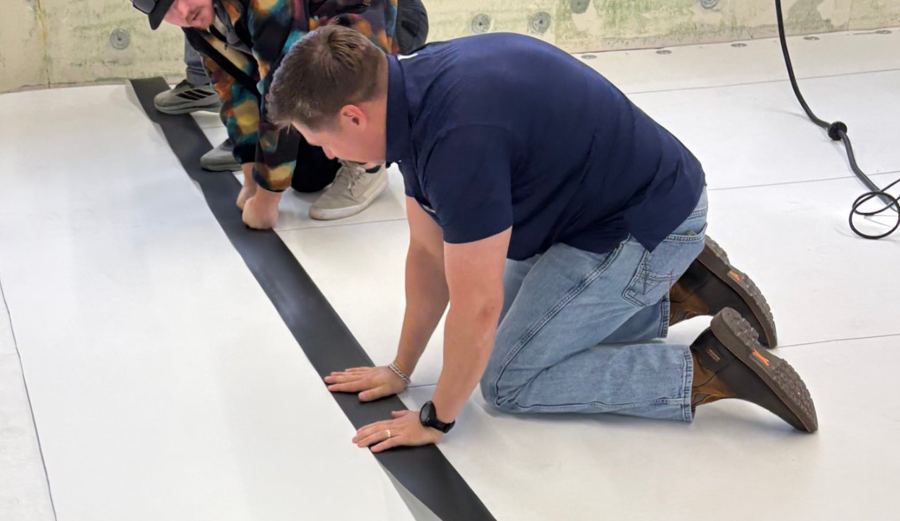
The short answerTPO is the most common choice for a commercial flat roof because it is white, heat welded, and moderately priced. PVC costs more and is the right choice where grease or chemicals reach the roof. EPDM is black rubber with a long track record and few seams. Modified bitumen is a multi-layer asphalt system that handles foot traffic and punctures well. How the roof is installed matters more than which system you choose.
Two families of flat roofs
The four systems fall into two groups.
Single-ply membranes are one sheet of material rolled out over insulation and fastened or glued down. TPO, PVC, and EPDM are all single-ply.
Modified bitumen, often shortened to mod-bit or MBM, is asphalt based and goes down in layers. It has more in common with the old tar-and-gravel roof than with a single sheet.
Side by side
| TPO | PVC | EPDM | Modified bitumen | |
|---|---|---|---|---|
| What it is | Thermoplastic sheet | Thermoplastic sheet | Synthetic rubber sheet | Polymer-modified asphalt |
| Layers | One | One | One | Two or more |
| Seams | Heat welded | Heat welded | Tape or adhesive | Torched, hot mopped, cold adhesive, or self-adhered |
| Usual color | White | White | Black | Dark granules, or a reflective cap sheet |
| Relative cost | Middle | Higher | Lower | Middle |
| Strong point | Reflects heat at a moderate price | Resists grease and chemicals | Few seams and a long track record | Tough against foot traffic and punctures |
| Watch for | Thickness and quality vary | Price | Heat gain, and seams that rely on adhesive | Dark surfaces run hot unless reflective |
TPO: the common choice
TPO is the membrane most commercial buildings get today. The sheet is white, so it reflects sunlight. The seams are welded with hot air, which fuses two sheets into one piece, so the seam does not rely on glue.
TPO is also the newest of the four systems, and published lifespan estimates vary widely. Thickness accounts for much of that difference. If you are comparing bids, make sure they quote the same thickness.
PVC: for roofs that take abuse
PVC looks and installs much like TPO. It is white, and the seams are heat welded. It costs more, and what you pay for is resistance to grease, oils, and chemicals. That makes it the usual choice over restaurant kitchens, where exhaust fans put grease on the roof, and on some industrial buildings.
EPDM: the rubber roof
EPDM has been on commercial roofs for decades. It comes in wide sheets, so a roof has fewer seams, and it is simple to patch.
There are two trade-offs. The seams are joined with tape or adhesive, not welded, so they are the first place to check as the roof ages. The sheet is also black, so it absorbs heat.
Modified bitumen: the multi-layer roof
Modified bitumen is asphalt that has been blended with a polymer to make it tougher and more flexible. According to the Asphalt Roofing Manufacturers Association, there are two kinds:
- APP is modified with a plastic. It handles high temperatures and sunlight well.
- SBS is modified with a synthetic rubber. It stretches and recovers, so it tolerates building movement and temperature swings.
A mod-bit roof goes down in layers, typically a base ply and a cap sheet. That gives the roof more than one layer of waterproofing, and the association notes that the layered build is hard to puncture. This is why mod-bit is a good fit for roofs that get walked on, such as roofs with a lot of equipment that needs service.
The sheets can be torched, hot mopped, set in cold adhesive, or self-adhered. The method matters. Torch work brings an open flame onto the roof, so cold-applied and self-adhered sheets are often the better choice on occupied or wood-framed buildings.
The association reports that 20-, 30-, and 40-year-old mod-bit roofs still in good condition are not unusual.
Roof color matters in East Texas
The U.S. Department of Energy reports that a conventional dark roof can reach 150 degrees or more in summer sun. A reflective roof stays cooler, which lowers the cooling load on the building and may extend the life of the roof.
Researchers at Lawrence Berkeley National Laboratory measured a black roof running 54 degrees hotter than a white roof next to it on a summer afternoon.
TPO and PVC are white to begin with. EPDM is usually black. Modified bitumen can go either way. The Department of Energy lists a cap sheet with a reflective surface or a reflective coating as the cool option for mod-bit.
What matters more than the membrane
Flat roofs usually fail at the details, not in the middle of the sheet.
- Drainage. Water that sits on a roof finds a way in. Slope, drains, and scuppers have to move it off.
- Flashings. Walls, curbs, pipes, and edges are where leaks start.
- Insulation and cover board. What is under the membrane decides how it handles foot traffic and hail.
- Attachment. Mechanically fastened and fully adhered systems behave differently in wind.
- Thickness. A thicker membrane costs more and holds up longer.
Which one fits your building
- TPO fits most offices, churches, retail buildings, and warehouses.
- PVC fits restaurants and buildings with grease or chemical exhaust.
- Modified bitumen fits roofs with heavy foot traffic or a lot of rooftop equipment.
- EPDM fits large, simple roofs where up-front cost drives the decision.
Repair, recover, or replace
A new roof is not always the answer. If the insulation is dry and the deck is sound, a leaking roof can often be repaired, coated, or covered with a new membrane over the old one. If the insulation is wet, it has to come out, because trapped water ruins a new roof from below. The roof has to be inspected before anyone can price the job.
Questions to ask before you sign
- Which system are you quoting, and why that one for this building?
- What membrane thickness is in the bid?
- How is it attached, and how are the seams made?
- What insulation and cover board are included?
- Has the existing roof been checked for wet insulation?
- Who inspects the finished roof, and what warranty comes with it?
Sources: Asphalt Roofing Manufacturers Association, multilayer asphalt roofing; U.S. Department of Energy, cool roofs; Lawrence Berkeley National Laboratory, cool roofs.
Have a flat roof that needs attention?
We will walk it, look for signs of wet insulation, and tell you whether it needs a repair, a recover, or a new roof.
More roofing insights
Standing seam or exposed fastener: metal roof cost, pitch, and upkeep
What each one costs per square foot, which roof pitch it needs, and how much upkeep to expect.
Read article
Roof storm damage: what to do after hail, wind, or a fallen tree
What to do first, and how to recognize hail, wind, and tree damage.
Read article